
In the Arena #6: your business isn't the frontier
Your next useful software project does not need the next model breakthrough. It needs the right model for the job and engineering around it.
Sam Altman and Dario Amodei are calling for the frontier AI labs to slow the pace of capability development. I take the safety questions seriously. But for a business deciding what to build next, most of the debate is noise.
We are not building the next frontier model. We are building software that helps people do their work. Those are very different jobs.
A company trying to route service requests, reconcile records, or get a useful draft into someone's hands does not need to wait for another leap in model capability. It needs a system that works with its data, follows its rules, and produces an output people can use.
The two posts
Sam Altman
TL;DR: Sam agrees that the frontier should be paced. He says the subject has been under discussion at OpenAI and commits to matching Anthropic's plan for independent evaluators with access comparable to employees. His post does not announce a blanket stop to AI development.
Read Sam Altman's September 12 post.
Dario Amodei
TL;DR: Dario argues that capabilities are advancing faster than safety work can keep up. He proposes embedded outside evaluators, coordination among frontier companies in democratic countries, and global coordination. Anthropic is committing to the evaluators first. He explicitly distinguishes pacing from halting model training or technical progress.
Read Dario's essay, “We Must Pace the Frontier”.
We engineer solutions
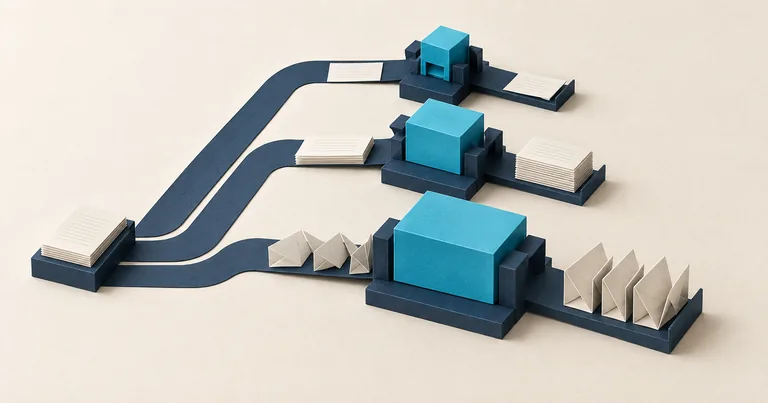
The model is one part of the software. We choose it for a particular job, then build the connections, permissions, checks, and human review around it.
Not every workflow needs complex reasoning. A predictable calculation belongs in code. Sorting a familiar request into a few categories may suit a small, fast model. A difficult exception may justify a more capable model or a person. We test those choices against examples from the actual work.
The output matters too. One task needs strict structured data. Another needs a concise summary. A customer-facing draft may need a particular tone. The model that produces the most impressive general answer is not automatically the one that produces the output your team needs.
Then we look at cost. Input tokens, output tokens, reasoning, retries, and review all affect what it takes to finish the work. Paying for maximum capability on every step can make a routine workflow too expensive to run at volume. The decision should come from the quality of the result and the cost of getting an acceptable one.
If a stronger model earns its place, we use it. But a business should not need a new frontier breakthrough just to make an existing process work better.
And choosing a smaller model does not remove the need for controls. The software still needs to enforce who can access what, validate outputs, and hand uncertain or consequential decisions to a person. Those rules belong in the system, not just in a prompt asking the model to behave.
That is the work we do at CoMavenAI. We engineer solutions around the models that fit. We do not build a business case around whatever model happens to be winning the headlines this week.
The frontier labs have a difficult problem to solve. Most businesses already have plenty of useful work they can get on with.
If you have a workflow you keep putting off while waiting for AI to get better, I'd like to hear what is getting in the way.
Best,
Justin